TT Buys TRAFiX, Adding Global Equities and Options to Multi-Asset Platform
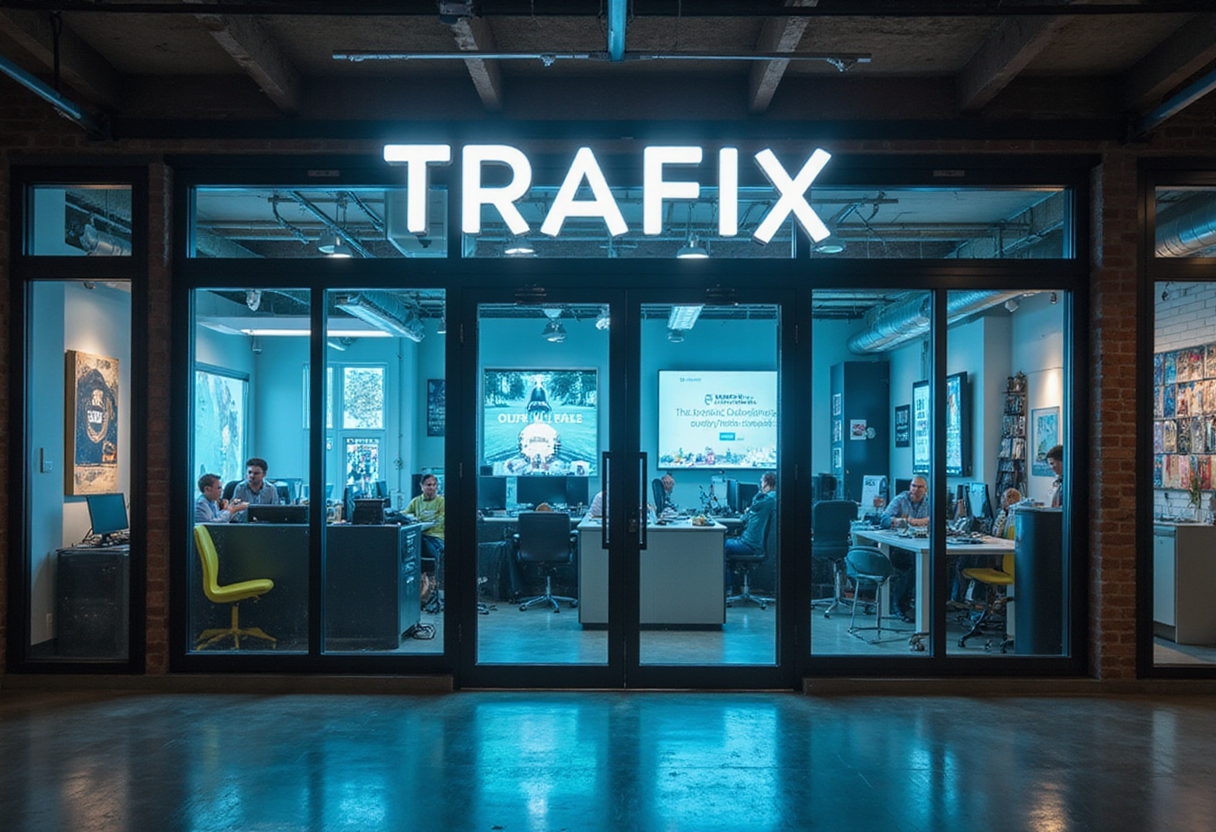
Trading Technologies has acquired TRAFiX, announced September 30, adding equities and equity options EMS/OMS and FIX connectivity as it targets cross-desk consolidation.
Execution notes
- Trading Technologies acquired TRAFiX, announced September 30; terms undisclosed, adding global equities and equity options OMS/EMS and FIX connectivity to TT's platform.
- TT CEO Justin Llewellyn-Jones says the companies will spend the next six months mapping workflows before integrating, citing similar modern technology stacks.
- Executives frame the deal around eliminating the multi-EMS 'swivel effect,' real-time cross-asset risk and P&L views, and consolidated compliance; TT describes its strategy as a 'multi-X journey' with more build, buy or partner decisions ahead.
Trading Technologies International has acquired TRAFiX, adding global equities and equity options to a platform that already covers futures and options, foreign exchange, fixed income, commodities and digital assets. The companies announced the transaction on September 30. Terms were not disclosed.
The deal brings TRAFiX's order and execution management systems and FIX connectivity into TT, extending the Chicago-based vendor's reach into cash equities and equity options for the first time.
Justin Llewellyn-Jones, CEO of Trading Technologies, told Traders Magazine that TT had sought an equities and equity options capability for some time. "TT was traditionally a futures and options solution, and then we've organically added fixed income and FX, but that really made us more of a FICC (fixed income, currencies and commodities) solution," he said. "We needed the cash equities, equity options component to round out the solution."
He also cited structural changes pressuring desks: shorter settlement cycles and a growing focus on managing capital, risk and margin intraday — operational demands that cut across asset classes and reward consolidated tooling.
Demand from both directions
Walter Fitzgerald, Co-Founder and CEO of TRAFiX, said customer demand was another driver of the combination. "What's also driving this is customers who are requesting that the technology vendors provide them with a much better innovative solution, a multi-asset global platform, so that they can grow their businesses and run them more efficiently," Fitzgerald said.
Michael Ottrando, Managing Director, Global Head of Sales at TRAFiX, said both companies had heard similar requests from clients — from opposite directions. TT clients asked for equities capability; TRAFiX clients asked for futures. "That's the direction that both firms were being pushed by the customers," Ottrando said.
Bringing the platforms together would give clients a central system for viewing risk and P&L across their trading activity in real time, he said. The TT platform already includes execution and order management, FIX and market connectivity, multi-asset risk management and analytics, regulatory reporting, trade surveillance, compliance workflows and margin analytics.
Targeting the 'swivel effect'
Llewellyn-Jones framed one objective plainly: reducing the number of separate systems firms run when trading across asset classes. He described the problem as a "swivel effect," where a trader executing a multi-asset or cross-asset strategy may work across three or four different execution management systems.
"What we're doing is getting rid of some of the friction points around that swivel effect, and we're enabling firms to get rid of redundant and duplicative systems," he said.
Fitzgerald said combining the companies' connectivity networks should also broaden customer access to liquidity sources globally. "We both have very robust networks where we connect to all the venues, exchanges, brokers, algos, etc. in our given space," he said.
Ottrando noted that trading desks themselves have changed, with the same people increasingly trading across multiple asset classes and regions rather than within individual markets. Consolidating those activities in one application would also give compliance teams a unified view.
"From a compliance level at the firm, you will be able to see everything in one location across multi-asset, multi-region. Whereas in the past they would have different applications for that. To see everything in real time from one platform is a tremendous asset," Ottrando said.
Integration timeline: six months of workflow mapping
Llewellyn-Jones said TT does not intend to run TRAFiX as another standalone system inside a collection of businesses. "We do not want to be a portfolio-based organization. We want to be a platform," he said.
TT plans to integrate TRAFiX into its platform, but Llewellyn-Jones said the companies will take a measured approach. The technology integration should be relatively straightforward, he said, because the two firms operate on modern and similar technology stacks. The harder task is preserving the workflows and functionality traders expect within individual asset classes and jurisdictions — the regulatory and workflow detail that varies by market.
"We're going to take our time over the next six months to really understand how we bring these workflows together in a way that is additive and valuable to the trader," Llewellyn-Jones said.
He also pointed to the legacy technology still running across the industry, estimating that much of that software will need modernization over the next five to 10 years. A shift toward more modern, modular technology could make it easier for firms to access and interact with their data and to deploy newer tools, including AI.
What comes next
TT's expansion is unlikely to end with TRAFiX. Llewellyn-Jones described the company's strategy as a "multi-X journey" spanning asset classes, workflows and geographies, with clients seeking access to liquidity across a growing range of markets. "One day, I would like a trader to be able to wake up and see they can trade anything on TT," he said.
Future expansion will not come exclusively through acquisitions. Llewellyn-Jones pointed to capabilities TT built organically in FX and fixed income, and said the company will continue to weigh whether to build, buy or partner as it adds functionality.
Both companies are also watching the shift toward around-the-clock markets. Llewellyn-Jones said the challenge extends beyond keeping technology running continuously: clients are still working through how to operate trading and post-trade functions on a 24/7 basis. "Supporting 24/7 trading is going to be something everyone will have to do," Fitzgerald said.
For now, the concrete deliverable is the September 30 deal itself and a six-month workflow-mapping exercise, with the integration outcome — a single multi-asset platform spanning futures, FICC and now global equities and equity options — the measure against which TT's platform claim will be tested.
via Traders Magazine (Source)
More from Marcus Bennett
Show full bio
Staff writer covering industry trends and analytics at Order Flow Brief.
48 articles
Blotter · related prints
Cboe, S&P DJI Extend Exclusive SPX Options License Through 2051
100TP ICAP Launches Electronic Trading in Structured Products
900TS Imagine Extends Trumid Integration for Fixed Income Order Flow
900Nasdaq Ventures Backs One Trading for 24/7 Derivatives Push
300Millennium Loses Head of Equities Trading Technology After Two Years
200